
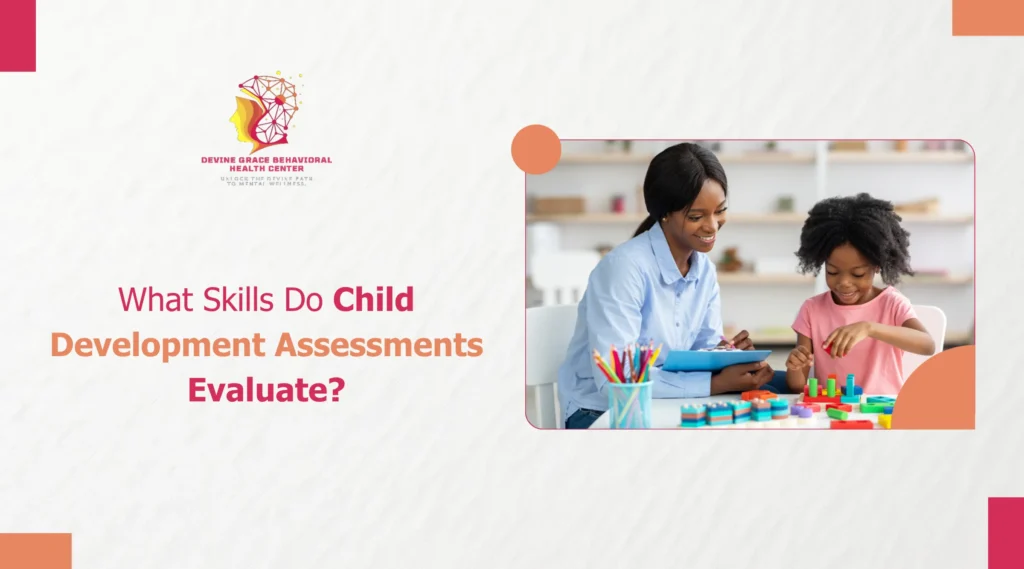
What are child development assessments? They are simple evaluation tools used by specialists to track early growth. Professionals measure cognitive, communication, motor, social and adaptive milestones. Rather than a rigid test, these playful check-ups highlight unique strengths, identifying where early support helps a child thrive.
Now, let us zoom right in and closely examine the very specific skills measured during these highly important visits.
Why Do Child Development Assessments Matter?
Acting beats waiting. Young minds shift quickly and tackling delays early can prevent major problems later. Kids soak in the world constantly. Every single passing moment matters when building a foundation for success. If they stumble over a skill (like talking), immediate support, not hesitation, completely transforms their future growth. Jump in now.
A proper evaluation saves your sanity. It stops the endless midnight scrolling. You finally get concrete answers. Instead of worrying blindly, you receive a proven strategy to support your child. Trust yourself.
What Core Skills Do Assessments Evaluate?
Professionals break down a child’s growth into five main areas. Each area covers different everyday activities and important milestones.
Cognitive Skills (Thinking and Learning)
Cognitive skills involve how a child thinks, how they learn and how they solve problems. It is all about understanding the big world around them.
During the evaluation, a specialist might check how your child does the following things:
- Sorts small objects by shape or by color
- Finds toys that are hidden under a blanket
- Remembers very simple instructions (like handing over a red ball)
- Understands cause and effect (such as pushing a big button to make a toy light up)
These simple tasks show exactly how your child processes new information every single day.
Communication and Language Skills
Language is about a lot more than just talking out loud. It is about sharing ideas with others and understanding friends and family. This part of the assessment checks two different things. First, it checks what words your child actually understands. Second, it checks how they express their own feelings and needs.
The evaluator will look for these important language milestones:
- Using hand gestures (like waving goodbye or pointing at a cute dog)
- Saying their very first words and eventually putting short sentences together
- Following simple spoken directions given by a parent or teacher
- Recognizing the names of familiar people and favorite toys
Motor Skills (Gross and Fine)
Motor skills involve physical movement and they are split into two different groups. Gross motor skills use the big muscles in the body, while fine motor skills use the small muscles in the hands and fingers. Both are very important for daily life.
Gross motor skills checked usually include:
- Rolling over and sitting up completely without support
- Crawling, walking and running around a large room
- Climbing up and down stairs safely
- Throwing or kicking a soft ball to another person
Fine motor skills checked usually include:
- Holding a chunky crayon or a small pencil correctly
- Picking up tiny objects (like a single piece of round cereal)
- Building a tall tower using small wooden blocks
- Turning the thick pages of a picture book
Social and Emotional Skills
Kids need to learn how to interact with other people and how to handle their big feelings. This part of the assessment looks at how your child plays and it also looks at how they react to the familiar faces around them.
The specialist will carefully watch to see if your child:
- Smiles back at you or laughs loudly during playtime
- Shows a healthy interest in other children nearby
- Shares their toys or takes turns during a fun game
- Calms down with a little help after getting very upset
These social skills are very important. They help kids make good friends and they also help kids do well when they finally start school and meet teachers.
Adaptive and Self-Care Skills
Adaptive skills are the daily chores a child does to take care of themselves. These skills grow quickly as the child gets older and becomes much more independent.
Common self-care skills include:
- Feeding themselves with a baby spoon or a small fork
- Drinking from a training cup without spilling too much water
- Washing and drying their hands at the bathroom sink
- Helping you get them dressed or trying to put on their own shoes
How Do These Assessments Improve Parenting?
Once the full assessment is done, you get a very clear picture of your child, seeing all their amazing strengths and exactly where they might need a little extra support.
You are never left alone to figure things out. Specialists will guide you every single step of the way. They might suggest fun physical therapy, helpful speech therapy, or even give you simple games you can play at home to help your child grow.
At Devine Grace Behavioral Health Center, we know parenting is a rewarding but tough job. Our parenting education programs give you the right tools, helping you nurture your child’s healthy growth.
Growth is what we aim for. We teach you how to build their emotional intelligence and show you how to boost their self-esteem. You get customized plans tailored directly to your unique family needs.
What Are the Signs Your Child Needs an Assessment?
Always trust your gut. Parents are usually the very first to notice when something seems slightly off, because you know your child better than anyone else in the whole world.
Look out for these very common signs:
- Your child does not respond to their name by their first birthday.
- They slowly lose skills they used to have before.
- They actively avoid making eye contact with you or others.
- They have extreme trouble calming down when they get upset.
- They fall far behind on major physical milestones (like walking or sitting up alone).
If you notice any of these signs, do not panic at all. Simply ask a professional for advice, because getting early support is always the best step forward for your family.
Why Partner with Devine Grace Behavioral Health Center?
Every family needs a strong village. You do not have to navigate these tricky early years by yourself. Devine Grace Behavioral Health Center offers great psychiatric rehabilitation services for minors, specializing in helping children who need extra behavioral and emotional support.
Our licensed therapists provide a safe space. It is completely free of any judgment. We take a complete approach to your child’s care, deeply understanding your child’s highly unique needs and we equip you with proven methods to help them thrive and grow. From individual counseling to amazing parenting support (and everything in between), we walk this path right by your side.
Getting an assessment is a brave choice. It is a very loving choice. It opens the door to resources that can totally change your child’s life for the better. Your child has amazing potential inside them and together, we can help them reach it. You can call us today to schedule a risk-free consultation. We will gladly help you assess your situation and review your great treatment options. Better days are ahead for your family.
FAQs
Q. What is a child development assessment?
It is a fun check-up. Doctors watch kids play games. It checks how kids grow and learn. It is not a scary test.
Q. What language skills are checked?
Doctors check if kids understand words. They look for waving, pointing and saying first words.